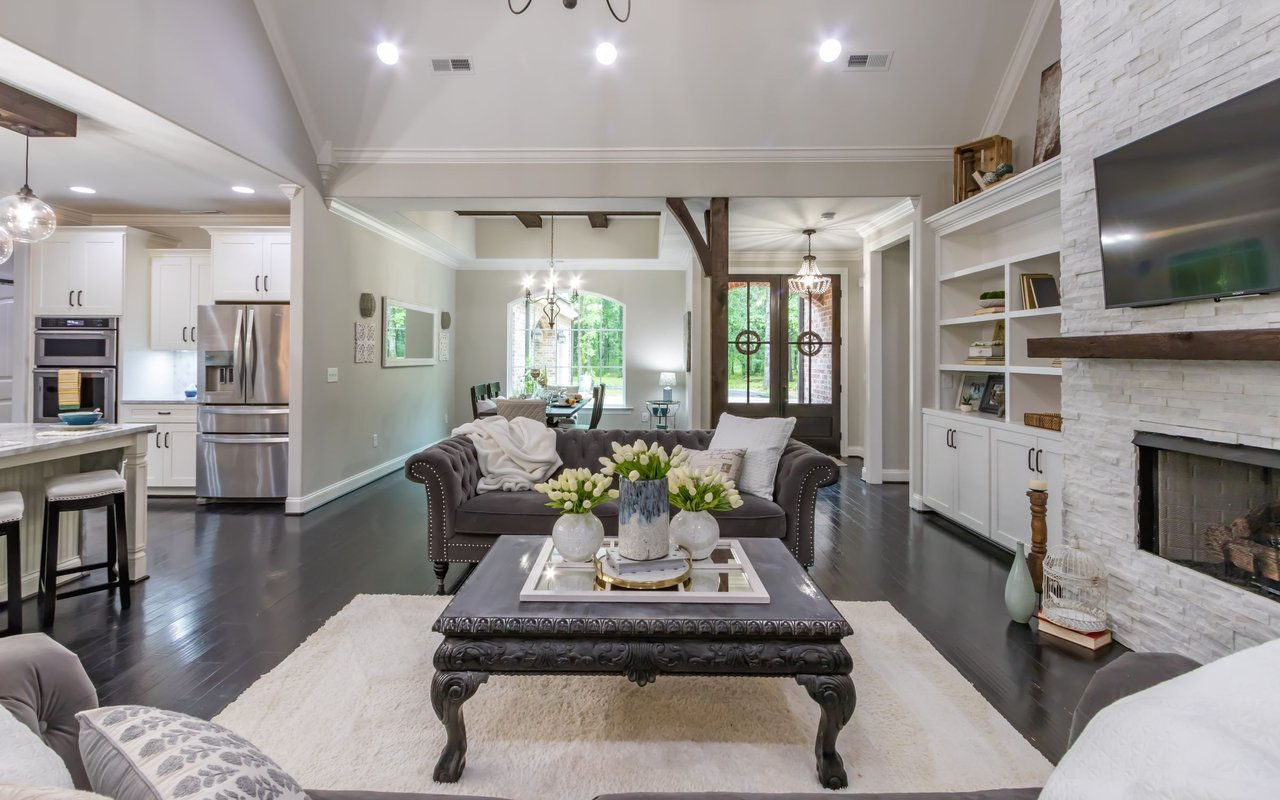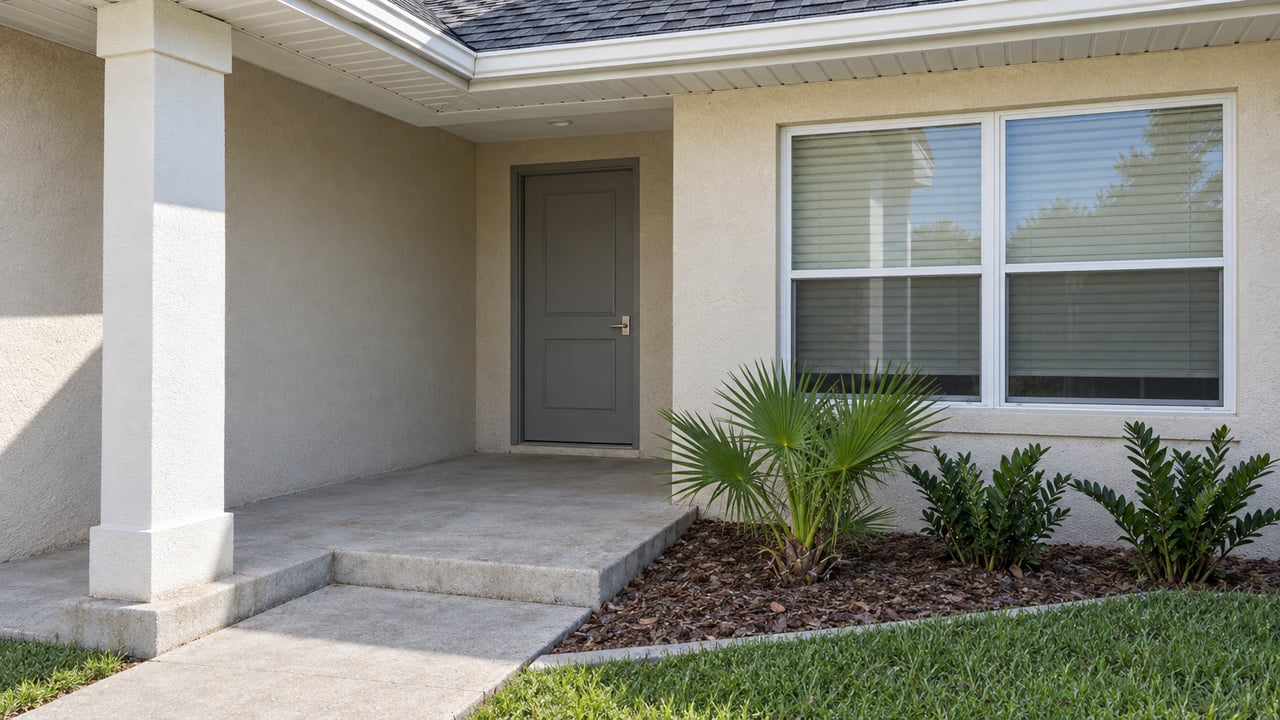
Picture two identical homes on the same Villages street. Both are assessed above $250,000, both carry the same amenity fee, and both are homesteaded. If Amendment 3 passes on November 3, these two homes could still get different property tax treatment for four straight years. Purchase price, square footage and the year each owner closed don't decide it. What decides it is whether each owner was a Florida resident on December 31, 2026.
That residency date matters more in The Villages than in most Florida communities, because so much of its buyer pool moves in from other states. A large share of what a Villages owner pays each year was never an ad valorem property tax, and Amendment 3 does not change those charges.
The date that matters is a residency date
Here is the final ballot language, as printed in the Florida Division of Elections' 2026 amendment booklet:
"Persons who are not Florida residents on December 31, 2026, will receive the existing homestead exemption upon qualifying for a homestead exemption, with the increased homestead exemption beginning with the fifth year of exemption, to the extent permitted by the U.S. Constitution."
The same summary says the homestead exemption for all non-school taxes rises to $150,000 in 2027 and $250,000 in 2028, then adjusts for inflation. The amendment takes effect January 1, 2027.
That wording is the second version. On August 4, 2026, a Leon County circuit judge ruled that the original title, "Save Our Homes From Excessive Property Taxes," and parts of the summary were misleading, as the Florida Phoenix reported. The Attorney General released the rewritten title and summary on August 14, according to NBC 6. The measure stayed on the ballot as Amendment 3. Any article that still uses the old title is describing the old summary.
The rule is about Florida residency, not about whether someone is a first-time buyer. A retiree who closes on a Villages home in 2027 after renting in Ocala since 2025 is treated differently from a retiree who closes the same week after moving from Ohio. In a September 2 note, the law firm Bilzin Sumberg said establishing permanent Florida residence is a separate question from qualifying a particular home for homestead, and that the December 31 date is about more than paperwork.
What the gap is worth on a Sumter County bill
To see the dollar size of that four-year wait, start with the levies the larger exemption would apply to. The Sumter County Property Appraiser's certified 2026 rates include these non-school millages:
| Non-school levy, 2026 certified | Mills |
|---|---|
| Sumter County | 4.8900 |
| Water board | 0.1831 |
| The Villages Fire District | 0.0464 |
| Total | 5.1195 |
The school rate of 4.7490 mills is left out because the larger exemption covers non-school taxes only. Sumter County's FY 2026–27 budget presentation says the 4.8900 General Fund rate has held steady since FY 2024–25 and is the proposed rate for FY 2026–27.
Florida TaxWatch publishes a simple formula. Multiply your total non-school millage by $98.59 to estimate 2027 savings, and by $198.59 for 2028. Those multipliers reflect the additional $98,589 and $198,589 of exempt value above the current non-school exemption of $51,411.
Running only the three levies above through that formula gives about $505 in 2027 and about $1,017 in 2028 for a homesteaded home assessed at or above the thresholds. This is an illustration for unincorporated Sumter County at 2026 rates, not an estimate for any actual parcel. Any other non-school millage on a given bill would raise it, and future rate changes would move it.
At 2026 rates, the gap between the two neighbors at the top of this post would be about $505 in 2027 and about $1,017 in each year after that, until the newer owner reaches their fifth exemption year. The longtime resident gets the larger exemption as soon as it starts. The newcomer keeps the existing exemption through year four.
Most of a Villages bill sits outside the amendment
Here The Villages differs from a typical Florida subdivision. Several regular charges are not ad valorem taxes, so a larger homestead exemption does not reduce them. District Government's own pages separate them out:
- Monthly amenity fee. The Districts describe it as a contractual monthly charge on the combined utility bill. Each home's deed covenant governs its CPI adjustments, and the fee is separate from the annual property tax bill. The Villages' published cost-of-living material lists a $204 monthly amenity fee as of February 2026 and notes that actual costs vary.
- Maintenance assessments. These appear in the non-ad valorem section of the tax bill and pay for district operations and infrastructure upkeep. Amounts vary by unit.
- Bond debt assessments. These also appear in the non-ad valorem section and repay money borrowed to build the original infrastructure. District Government posts amortization schedules by county, district and unit.
- Utility charges. The combined monthly bill can include water, wastewater, irrigation, sanitation and RV storage, depending on location and service.
Two things follow for anyone comparing homes. First, the amendment's savings are smaller as a share of total carrying cost in The Villages than in a community without these charges. Second, a home whose bond has been paid down still differs from a newer-unit home in exactly the ways it did before the vote. You can check those numbers on the District Government FAQ and the bond schedules it links to. Amendment 3 doesn't change them.
Seasonal owners get a different change
Many Villages homes are second homes, and Amendment 3 treats them differently. Second homes, rentals and commercial property don't receive the larger homestead exemption. Instead, the yearly cap on how fast their assessed value can rise drops from 10% to 5%, according to Florida TaxWatch. Save Our Homes and portability stay in place for homesteaded owners. That includes the existing annual cap on assessed-value increases of 3% or the rate of inflation, whichever is lower.
For a seasonal owner, then, the benefit shows up slowly, through smaller annual assessment increases. There is no single drop in taxable value.
Sumter County has already drafted a budget for a yes vote
At a July 14–15, 2026 workshop, Sumter County staff presented an alternate budget built for an Amendment 3 win. It projects a $24.9 million General Fund property tax loss in FY 2027–28, the first full year, and $45.1 million cumulatively by FY 2028–29. The plan also assumes voters reject renewal of the fifth- and sixth-cent fuel taxes, which the presentation calls the primary source of road maintenance money.
The plan protects the Sheriff, fire and EMS, ambulance, 911 and emergency management. The contingency list includes:
- Closing the Webster, Lake Panasoffkee and Belvedere library branches
- Moving the Citizens Information Center to an AI tool by August 1, 2027
- Closing the Veterans Service Office
- Reducing library hours and stormwater and road technician positions, with service reductions starting October 1, 2027
None of these cuts has happened. They are planned responses that depend on how the vote goes. The county-level total is larger. ClickOrlando reported Florida TaxWatch's estimate of $347.4 million in reductions across all Sumter County local governments from FY 2027–28 through FY 2031–32. That figure combines every local government in the county and is not the county's own budget number.
Next door, the Florida League of Cities' city impact table, based on 2025 tax rolls, estimates the exemption would remove about $2.404 billion of homestead taxable value in Wildwood. That is 29.5% of the city's taxable value under current law. Villages-News reported on August 18 that Wildwood commissioners urged voters to reject the measure, and that Commissioner Green called it unfair because new homeowners can't get the larger exemption for five years.
The five-year rule carries its own legal caveat
The ballot text limits the five-year wait to what is "permitted by the U.S. Constitution." Florida has had a residency rule like this before. In 1983, in Osterndorf, the Florida Supreme Court struck down an earlier five-year residency requirement for a homestead exemption. The court found no rational basis under the Florida Constitution's equal protection clause for treating bona fide residents differently by how long they had lived in the state. It specifically left the federal equal protection and right-to-travel questions undecided. The new ballot language makes the five-year wait subject to the U.S. Constitution in its own text.
Where the vote stands
A constitutional amendment needs 60% approval to pass. Recent polls disagree. A James Madison Institute poll taken September 28 to October 4, 2026 found 63% support. An AIF-commissioned McLaughlin & Associates poll taken September 28 to October 1 found 53% after respondents heard the full ballot language, Florida Politics reported. On October 13, the South Florida Sun Sentinel put three recent polls side by side, at 63%, 55% and 42%. It cited UCF political scientist Aubrey Jewett, who said the 60% bar makes the outcome uncertain, and noted that the polls used different wording and methods.
Quick answers
Does Amendment 3 lower my Villages amenity fee? No. District Government describes the amenity fee as a contractual charge governed by each home's deed covenant, separate from the property tax bill.
Would the school portion of my tax bill change? The larger exemption applies to non-school taxes only.
When would anything take effect? January 1, 2027, if the amendment passes.
This post is general information, not legal, tax or financial advice. Residency and homestead questions depend on your own circumstances, so confirm yours with a tax professional, an attorney or the Sumter County Property Appraiser.
If you're weighing a Villages purchase around the December 31 residency date, or comparing homes by their bond and amenity charges instead of list price alone, Anna Beverly can go through those numbers with you, home by home. Buy or Sell Your Central Florida Home — Contact Anna Today.